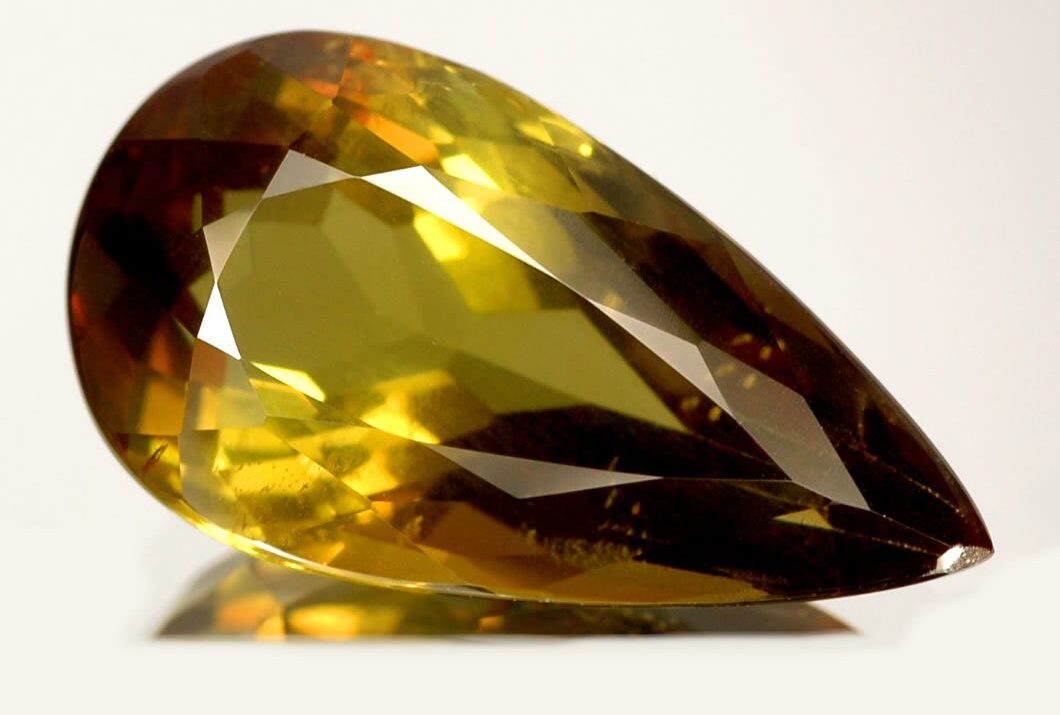

Imagine a gem that never looks the same twice. Hold it in your hand and turn it. Green flashes from one angle, red-brown from another. Sometimes a golden light appears. This is andalusite, one of nature’s most unique stones. It is rare, hard to find in fine quality, and often overlooked. Yet those who know it prize it for its natural magic.
A Stone With Two Faces
Andalusite is known for its strong pleochroism. That means it shows more than one color depending on the viewing angle. Most gems show one main shade. Andalusite shifts. From one side you may see earthy green. From another, warm brown or deep red. Sometimes both appear at once, creating a checkerboard of tones. Jewelers often cut it in ways that highlight these effects.
This property gives andalusite life. It never feels flat or dull. Light plays across it, changing with each movement. For people who like gems with character, it is a perfect choice.
Where It Comes From
The gem was first found in Andalusia, Spain, in the late 18th century. That is how it got its name. But Spain is not its main source today. Fine crystals come from Brazil, Sri Lanka, India, and even parts of the United States. Brazil is the most famous modern source, with stones showing strong colors and good clarity (Gemporia).
Andalusite forms in metamorphic rocks, where heat and pressure reshape minerals deep in the earth. This makes large clean crystals unusual. Many crystals contain natural inclusions, small features inside the stone. While these can add character, they often make cutting clear gems harder. That is one reason fine andalusite is rare.
The Science Behind Its Beauty
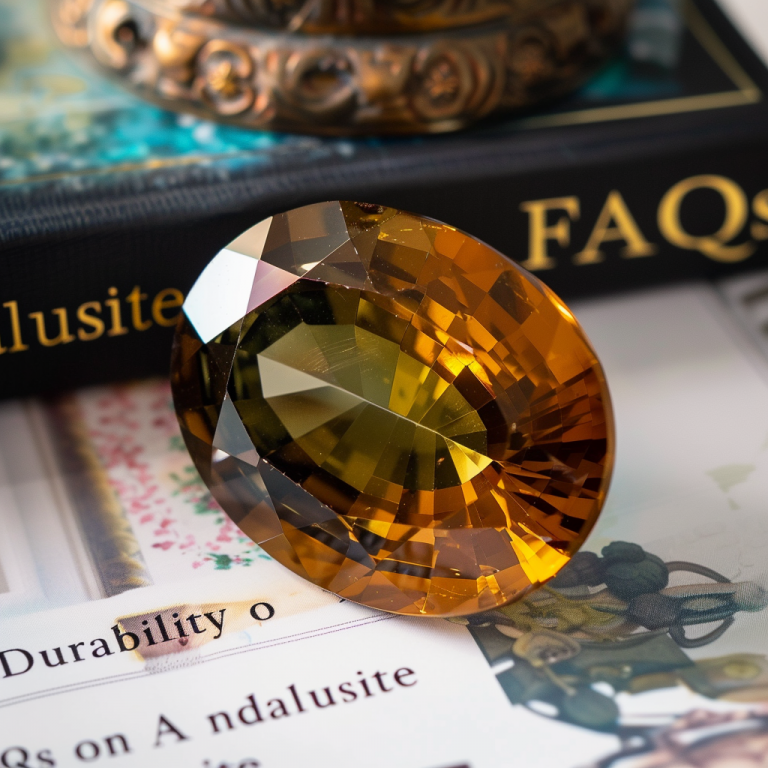
Gem labs have studied andalusite closely. It is a transparent silicate mineral with a specific gravity of about 3.16. It has a hardness of 7.5 on the Mohs scale, strong enough for daily wear. Its refractive index ranges near 1.63 to 1.65, and birefringence near 0.009. For jewelers, these numbers help identify it (GIA PDF).
The most striking trait remains its color play. Scientists call it trichroic, as it shows three colors: green, brown, and yellow-red. The way a gem is cut can highlight or soften this effect. A well-cut stone can show color shifts with every turn of the hand.
Rare, But Not Famous
Unlike sapphire or emerald, andalusite has never become a mainstream gem. That makes it rare in the jewelry market. Large fine stones above 5 carats are hard to find. Even smaller ones with strong pleochroism are uncommon.
For collectors, this is part of its charm. Owning an andalusite means having something most people have never seen. It is a conversation piece. People notice its shifting colors right away. Unlike treated stones, its beauty comes directly from nature.
Ancient Stories and Modern Use
Andalusite has an interesting link to lore. A variety called chiastolite shows a natural cross pattern inside. People in Spain and other countries once carried it as a charm for protection. The cross was not carved. It was formed naturally by graphite inclusions in the crystal. This made the stone a symbol of faith and strength (GemSociety).
Today, most jewelers use faceted andalusite rather than chiastolite. Faceted gems go into rings, earrings, and pendants. Because of its hardness, it stands up well in jewelry. Still, it is best to avoid harsh blows or extreme heat, as with any fine stone.
Why It Stays Rare
Several factors keep andalusite rare in the market:
- Limited sources: Only a few places produce fine gem quality.
- Small crystals: Many pieces are too small or flawed for cutting.
- Lack of awareness: Jewelers often choose well-known gems instead.
This combination means supply stays low. Even if demand grows, the market cannot flood with large amounts. That keeps fine stones valuable for collectors.
Buying Tips
If you look for andalusite, focus on color play. Strong shifts between green, red, and gold are best. Transparency also adds value. Small inclusions are normal but should not distract. Cuts that show off the color shifts are more desirable.
Because the gem is not widely known, prices are often lower than for sapphire or tourmaline of similar size. That makes it an opportunity. You can buy a rare stone at a fraction of the cost of mainstream gems.
The Collector’s Gem
Many collectors enjoy andalusite for its rarity. It fills a unique place in a gem collection. Few stones show trichroism so strongly. The most famous comparison is tanzanite, but even tanzanite rarely shows such bold shifts.
Owning one feels special. Each gem is one of a kind, its colors set by nature. You cannot predict how it will look until it is cut. Some stones glow with golden warmth, others lean more green or brown. All reward close viewing.
A Personal Connection
Picture a jeweler at the bench. They turn a rough crystal in their hand, looking for the best way to cut. The gem holds both promise and challenge. Cut it wrong and the colors dull. Cut it right and the stone comes alive. This is the art of working with andalusite.
Collectors often feel this same sense of discovery. Buying andalusite is not just about adding another gem. It is about finding a stone that feels alive, that shifts as you shift. It invites you to look again and again.
Why It Deserves More Attention
Andalusite will never be as famous as diamond or ruby. But it deserves more notice than it gets. It offers beauty that is natural, unique, and full of surprise. It connects science, art, and history in one stone (Gemporia).
When you hold one, you hold a piece of the earth’s story. Formed under pressure, hidden for ages, cut to reveal shifting light. Rare, natural, and always changing.
Final Thoughts
Andalusite is rare. Fine stones are hard to find, even harder above a few carats. Its beauty lies in change, in colors that move with every glance. Collectors know its value, jewelers enjoy its challenge, and those who wear it carry a stone unlike any other.
If you ever see one, take a moment. Turn it in the light. Watch the green, red, and gold dance. Few gems can match that quiet magic.